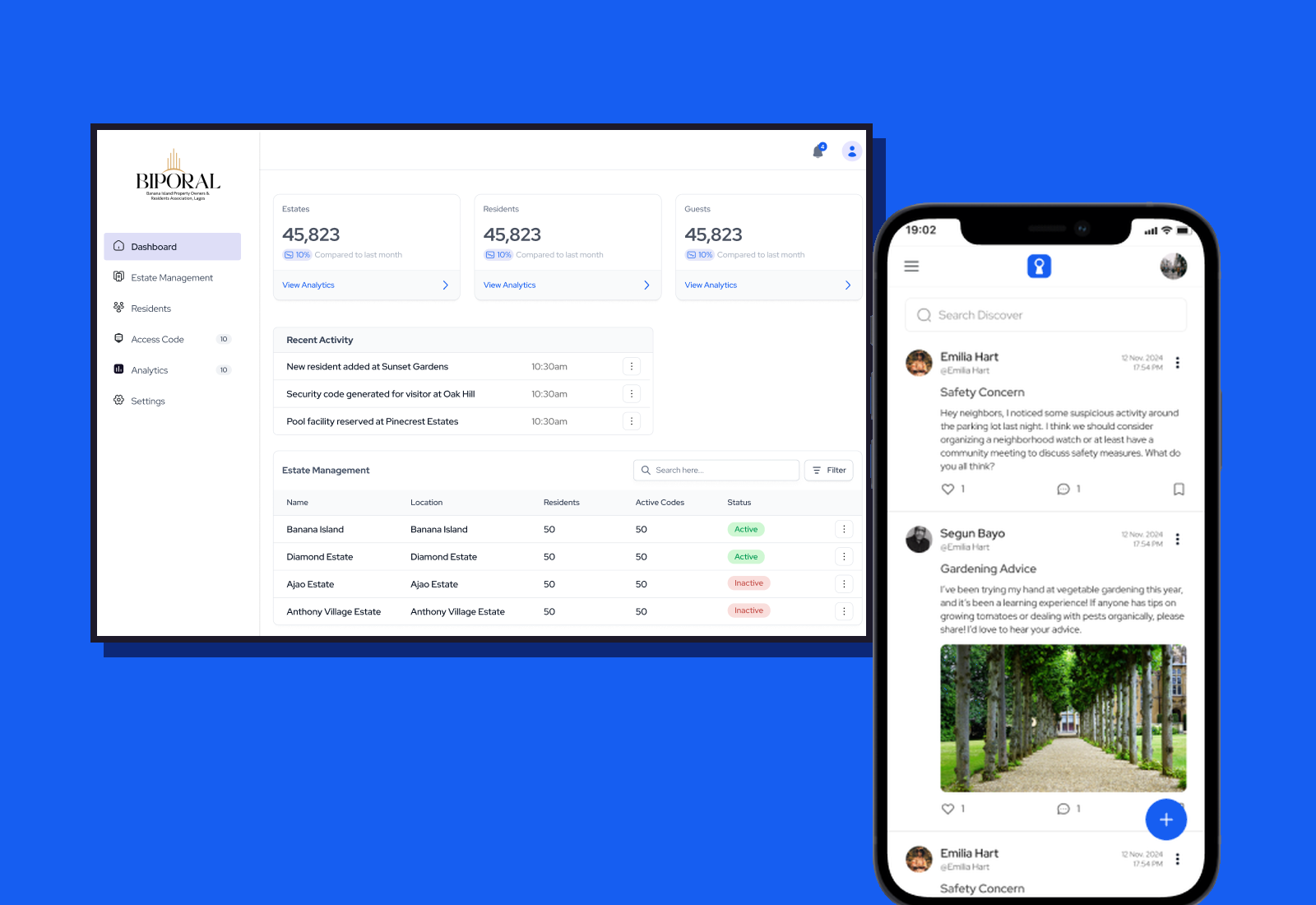
TL;DR
- The problem: estate tasks were split across several apps. When guest codes failed, security had to spend money calling residents for verbal approval, and the booking app allowed double bookings.
- What I did: research with every user group, a role-based product structure, a self-serve guest access flow, in-app bill payments, and a reusable design system, through testing, launch fixes and App Store assets.
- Business impact: a product ready to onboard new estates from one admin dashboard, a new in-app payment channel, and faster, cheaper development for every feature after launch.
The brief
The estate ran on fragmented workflows. Residents needed a different app for almost every task: one to recharge electricity, another to generate guest codes, another to book facilities. None of them worked well together, and that showed up as real cost:
- Failed guest codes cost money. When a code didn't work at the gate, security had to spend money calling the resident to get a verbal approval before letting the guest in.
- Facility booking was unreliable. The booking app allowed double bookings, so residents could turn up to a facility and find it already taken or overfilled.
- Too many apps for simple tasks. Residents switched between apps for everyday things, and the estate had no single view of what was happening.
My job was to design one all-in-one app that gave residents and the estate a smoother workflow, with guest access, payments, bookings and estate management in one place, and a foundation that could later serve other estates.
My role: end-to-end product designer, from research and information architecture through wireframes, prototypes, usability testing, the design system, developer handoff, launch fixes and App Store screenshots.
What I found
I spoke with residents, estate management and security staff, audited the existing apps, mapped the key workflows and benchmarked other property-management products. Three findings shaped every decision after that:
- Guest access was the bottleneck When a code failed, security had to call the resident for a verbal OK. It was the most frequent task, and the most costly when it broke.
- One app can't fit four jobs Residents want speed. Security needs a quick yes or no. Management needs oversight. Admins need every estate in one view.
- Every task had its own app Electricity, guest codes and facility booking each lived in a separate app, so nothing connected and nothing was in one place.
Decision 1: Make guest access self-serve
The biggest drain on security's time, and money, was confirming visitors by phone when codes failed. So I took security out of the setup completely. Residents now create a guest code themselves and share it, and security only has to check it.
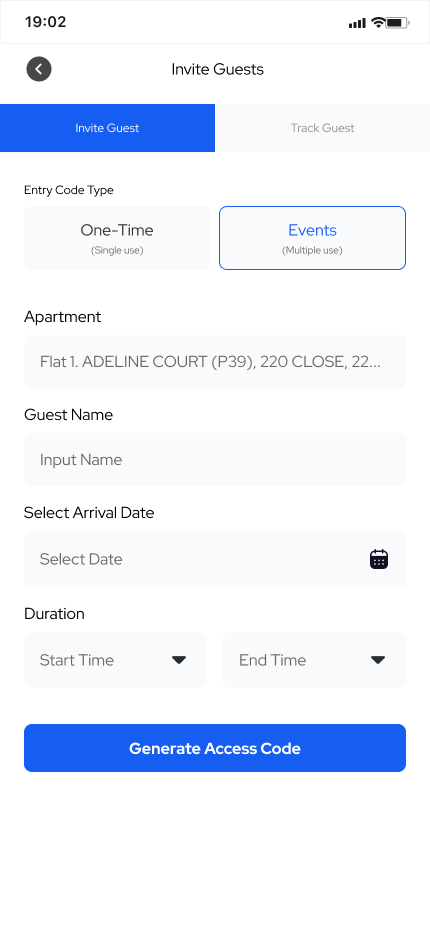
resident creates the invite
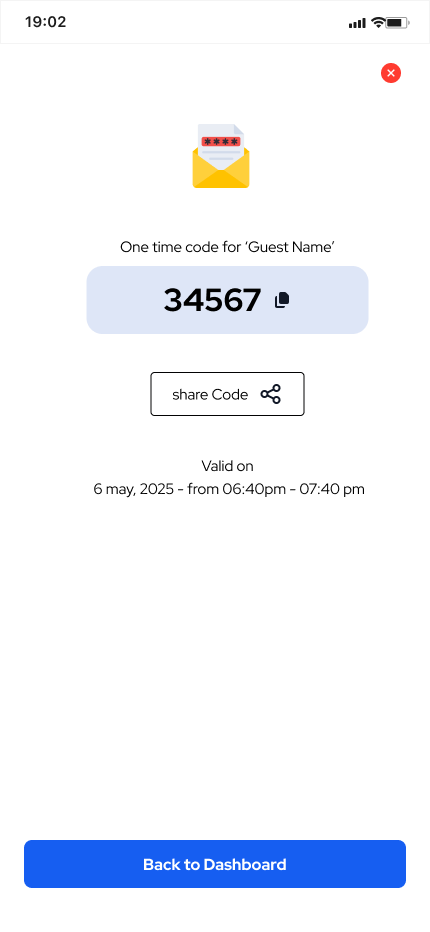
code is ready to share
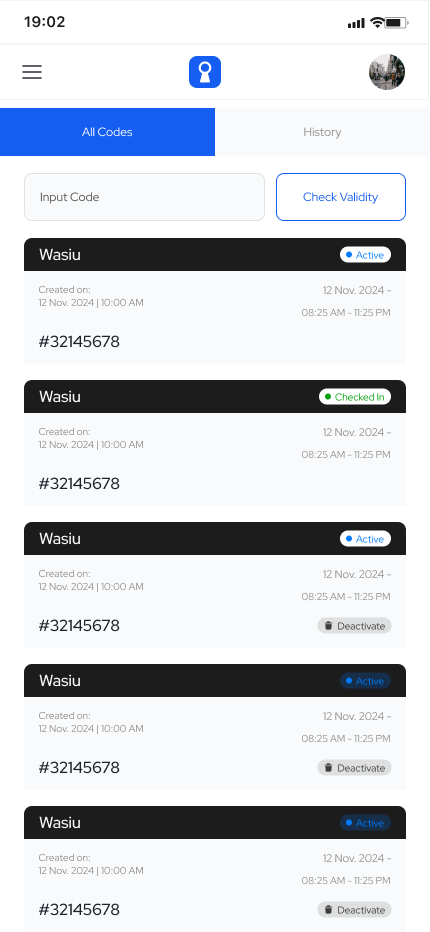
security checks the code
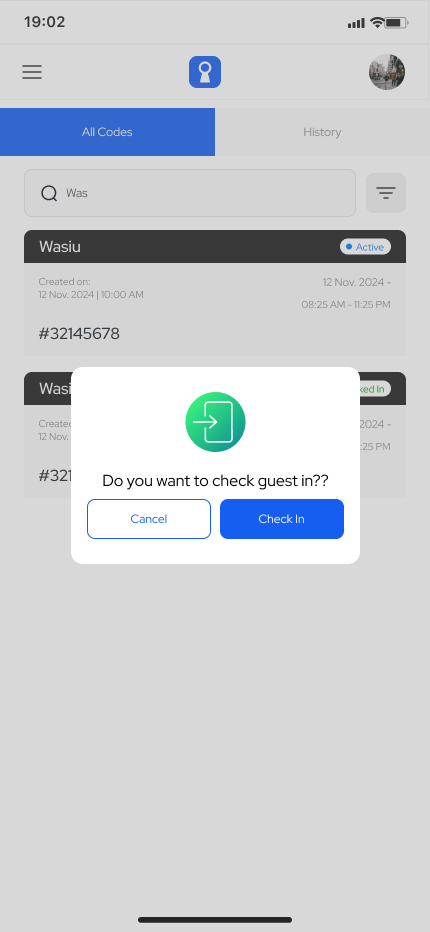
guest checked in
- One-time and event codes, so a resident hosting a party creates one code instead of twenty.
- Time windows on every code, so access expires on its own and nobody has to remember to revoke it.
- A verification screen built for the gate: type the code, get a clear answer, check the guest in with one tap. Invalid or already-used codes are flagged immediately.
Why it matters to the business: fewer calls to the gate, faster entry for guests, and a feature residents use every week, which keeps them in the app.
Decision 2: Bring payments into the app
Electricity, gas and service charges were paid outside the product. I designed them into the resident app as simple, single-screen forms, next to facility booking.
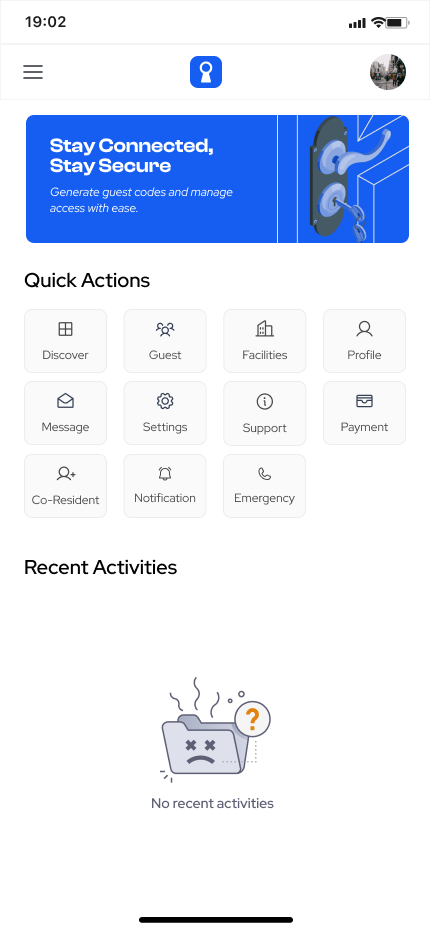
every service from the home screen
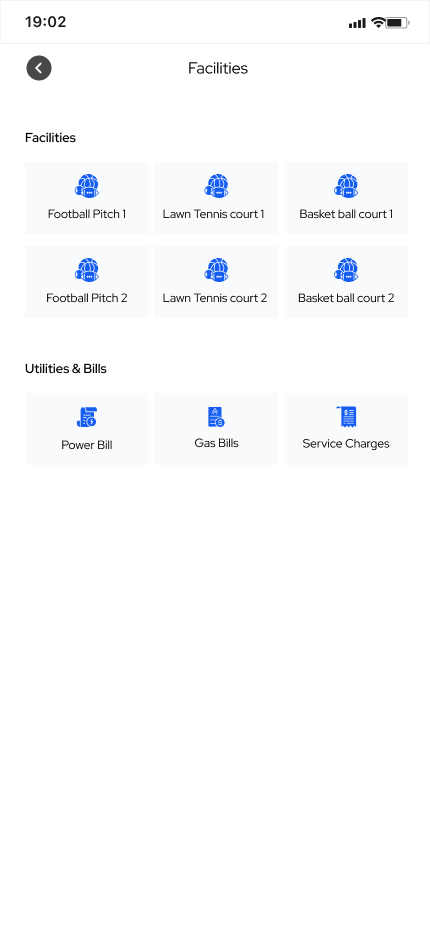
book facilities, pay bills
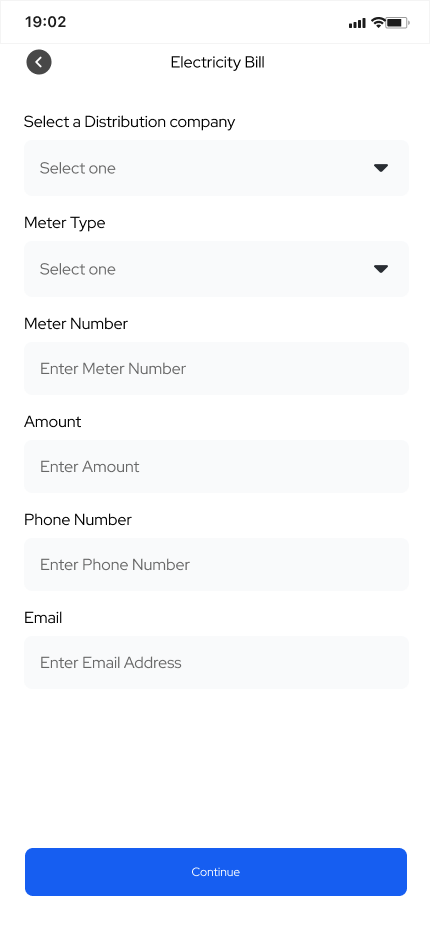
recharge electricity in one form
Why it matters to the business: payments give residents a reason to open the app regularly, and give Funkash a transaction channel to build revenue on.
Decision 3: Separate tools for each role
Instead of one cluttered app, I designed four connected products that share the same data: a resident app, a security app, a management app and an admin dashboard. Each one only shows what that person needs to do their job.
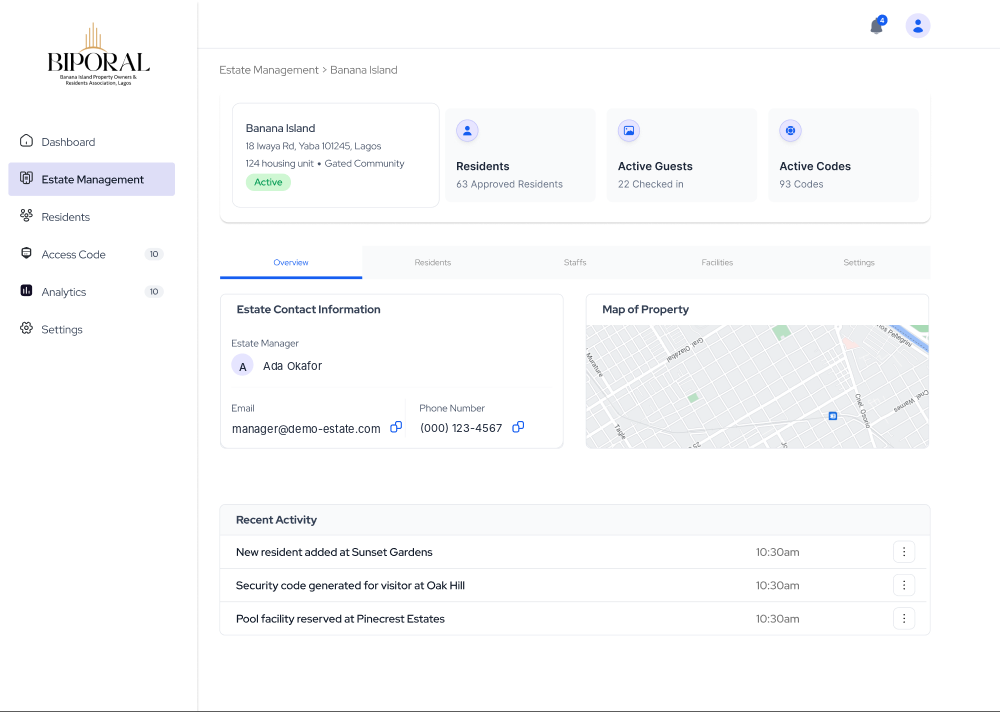
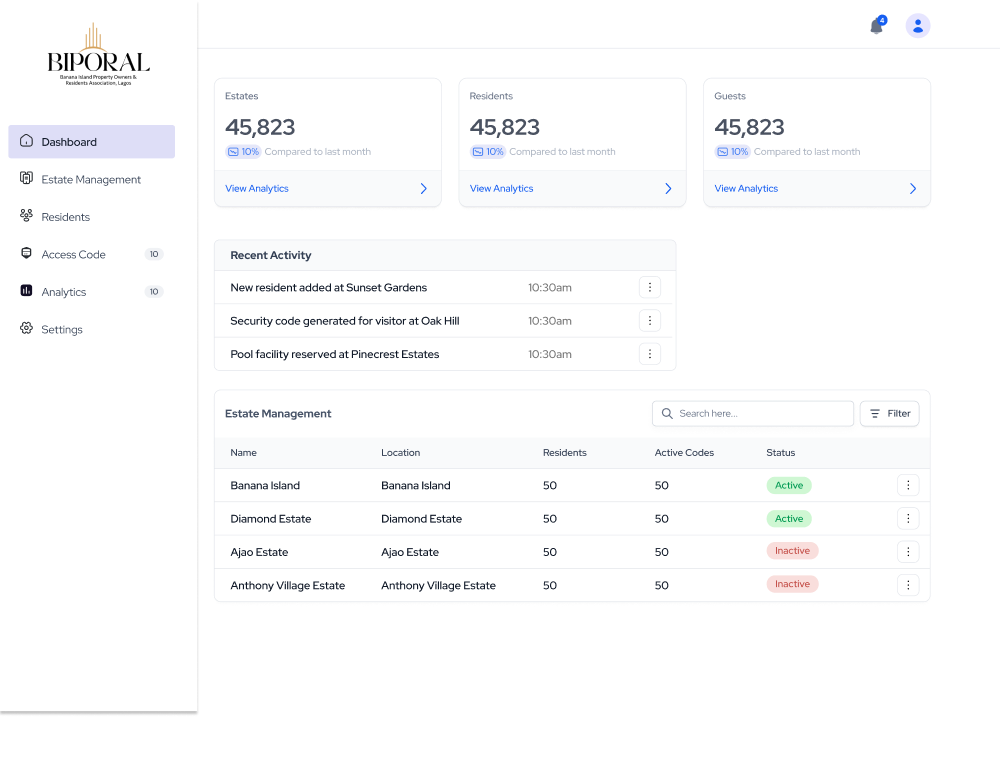
Why it matters to the business: the admin dashboard is what turns Accessly from one estate's app into a product Funkash can sell. A new estate is set up from the dashboard, not built from scratch.
Decision 4: A design system the developers can reuse
I created a shared component library for all four products: a colour scale with contrast checks, typography, buttons, forms, feedback messages, navigation and states.
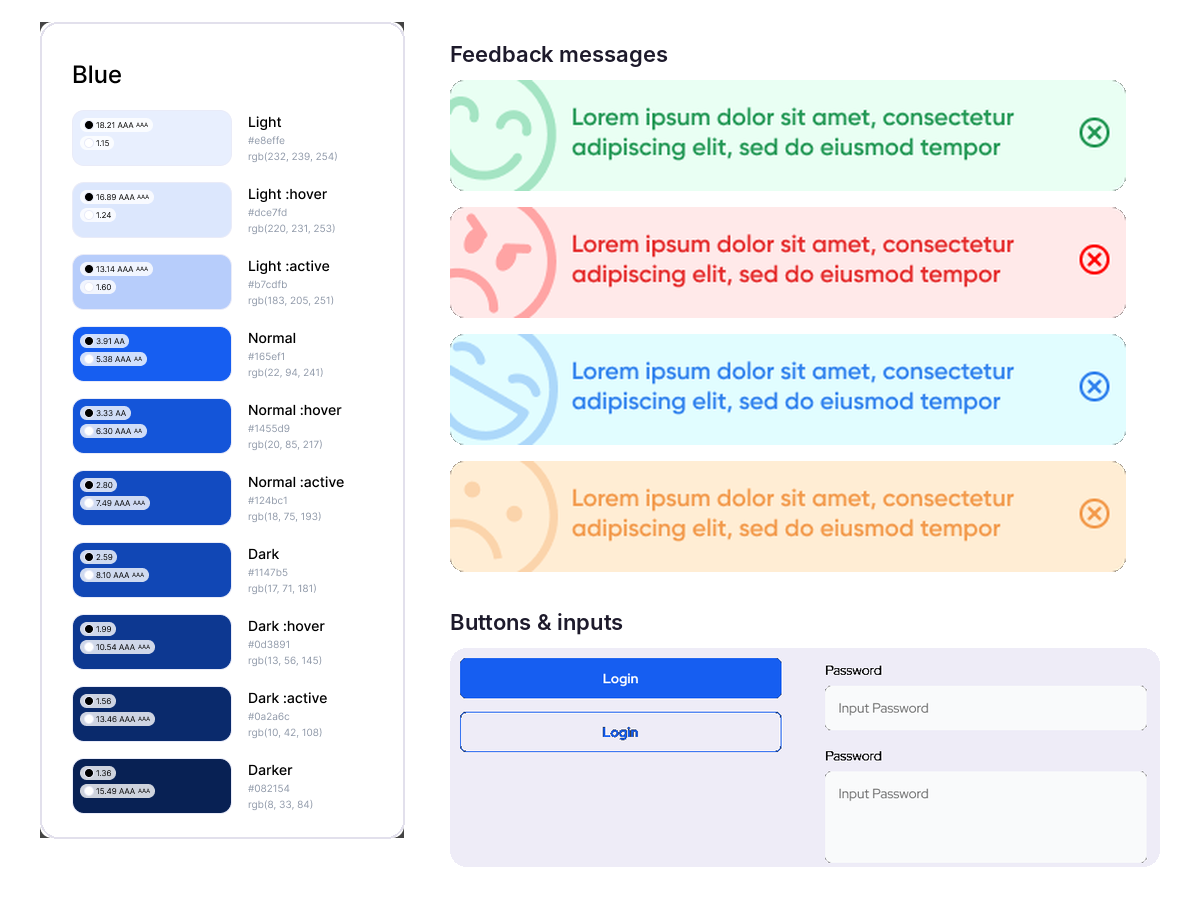
Why it matters to the business: developers build new screens from existing components instead of starting from zero, so every feature after the MVP ships faster and costs less.
Testing and launch fixes
I tested the prototypes with residents, management and security. Their feedback changed the navigation, guest-code creation, forms, readability and contrast.
Before launch, I reviewed the full build and fixed the issues that cause support tickets and drop-off: missing back buttons, settings that led to the wrong place, a log-out button too close to the screen edge, missing empty states, and no way for new residents to tell whether their account had been approved.
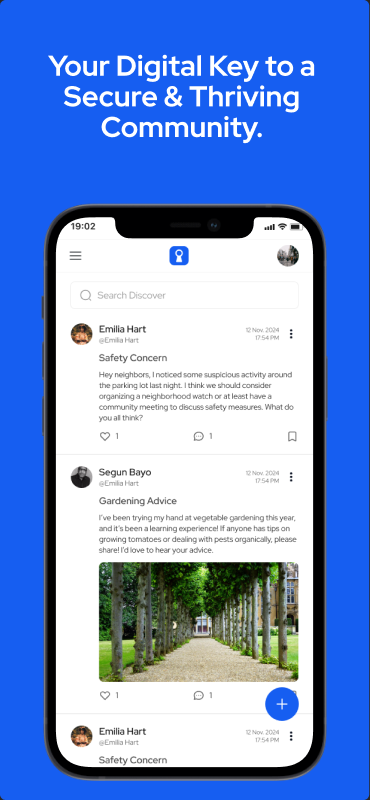
I also designed the App Store and Play Store screenshots, so the listing sells the product before anyone downloads it.
The outcome
The estate went from a patchwork of separate apps to one MVP built to scale:
- Residents handle guests, bills, bookings and emergencies in one app.
- Security checks guests in with one tap instead of phone calls.
- Management sees every resident, guest and code in their estate.
- The business can onboard new estates from one dashboard, has an in-app payment channel, and has a design system that keeps development fast.
What I'd bring to your team
I design products where different types of users depend on the same system, and I make decisions based on what moves the business: adoption, operating cost and room to grow. If that's the kind of problem your team is working on, I'd love to talk.
What changed
- 1 tapfor security to check a guest in
- 3bill types residents now pay in the app
- Multi-estateone admin dashboard to onboard and run every estate